
Kyiv, 3 November 2026 – An attack by Russian armed forces that killed dozens of civilians gathered to receive humanitarian aid in Zaporizhzhia region on Monday shows the devastation powerful aerial glide bombs cause when used in populated areas, the UN Human Rights Monitoring Mission in Ukraine (HRMMU) said today.
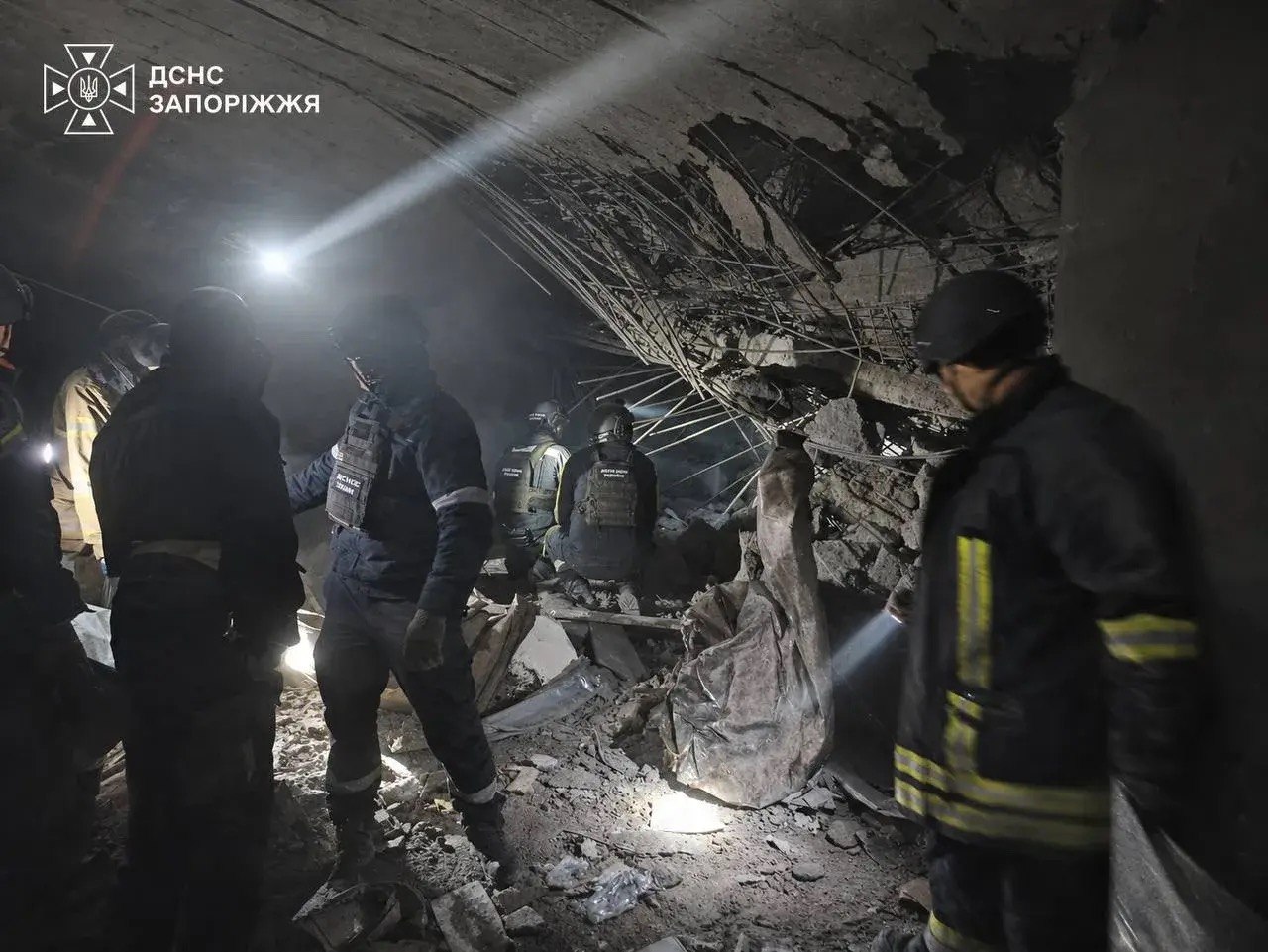
The attack in which multiple glide bombs struck a school building in Komyshuvakha, Zaporizhzhia region took place in the morning as civilians had gathered to receive humanitarian aid. Local authorities had announced the distribution of humanitarian aid the day before on a social media channel with nearly 5,000 subscribers, stating that the distribution would take place at the school between 10 AM and noon on 2 November.
As of early evening on 3 November, local authorities had announced that at least 31 civilians had been killed and five injured in the attack, but that search and rescue operations continued. HRMMU is working to verify the exact number of civilian casualties.
"Dozens were killed while civilians gathered to receive humanitarian aid in Komyshuvakha - the timing and location of the humanitarian distribution was well publicized,” said Danielle Bell, head of HRMMU. “Either the Russian armed forces knew that there was a humanitarian distribution taking place, or they failed to take the most basic steps to find out what was happening in this village they were planning to attack. In either case, this attack seems to have violated the most fundamental principles of international humanitarian law.”
International humanitarian law protects civilians and civilian objects. It prohibits attacks directed against them as well as indiscriminate and disproportionate attacks. It requires an attacking party to take all feasible precautions to avoid and minimize civilian casualties and damage to civilian objects.
Local authorities said that nine aerial bombs struck Komyshuvakha in two waves on 2 November. HRMMU has reviewed and analyzed photos and videos of the aftermath of the attack. The destruction in the footage is consistent with the use of powerful aerial bombs.
Before yesterday’s attack, aerial glide bombs had killed at least 478 civilians and injured 2,667 in Ukraine in 2026, accounting for 16 per cent of all verified civilian casualties.
Aerial glide bombs are large bombs launched from fighter aircraft. They are equipped with wings and sometimes guidance systems that allow them to glide for up to 100 kilometers from the launch point. Russian armed forces started using such weapons in 2023, including in populated areas.
Aerial glide bombs can carry hundreds of kilograms of explosives, which generate substantial blast effects, fragmentation and structural damage when they detonate. Their destructive power is particularly significant in populated areas, where even a single impact can damage or destroy buildings. The combination of large explosive payloads, extensive blast effects and the potential collapse of multi-storey buildings create a substantial risk of multiple fatalities and injuries, including among people sheltering indoors. Repeated strikes in the same area may substantially increase civilian harm, especially when civilians and emergency responders gather following an initial strike.
Another humanitarian distribution operation in Komyshuvakha came under attack on 15 June 2026, when an attack by a short-range drone injured four civilians. The organization distributing the aid subsequently suspended distribution in the settlement due to security risks.
HRMMU will continue its verification of the civilian harm arising from this attack, as well as its monitoring and documentation of civilian casualties and the wider human rights impact of the war in Ukraine.