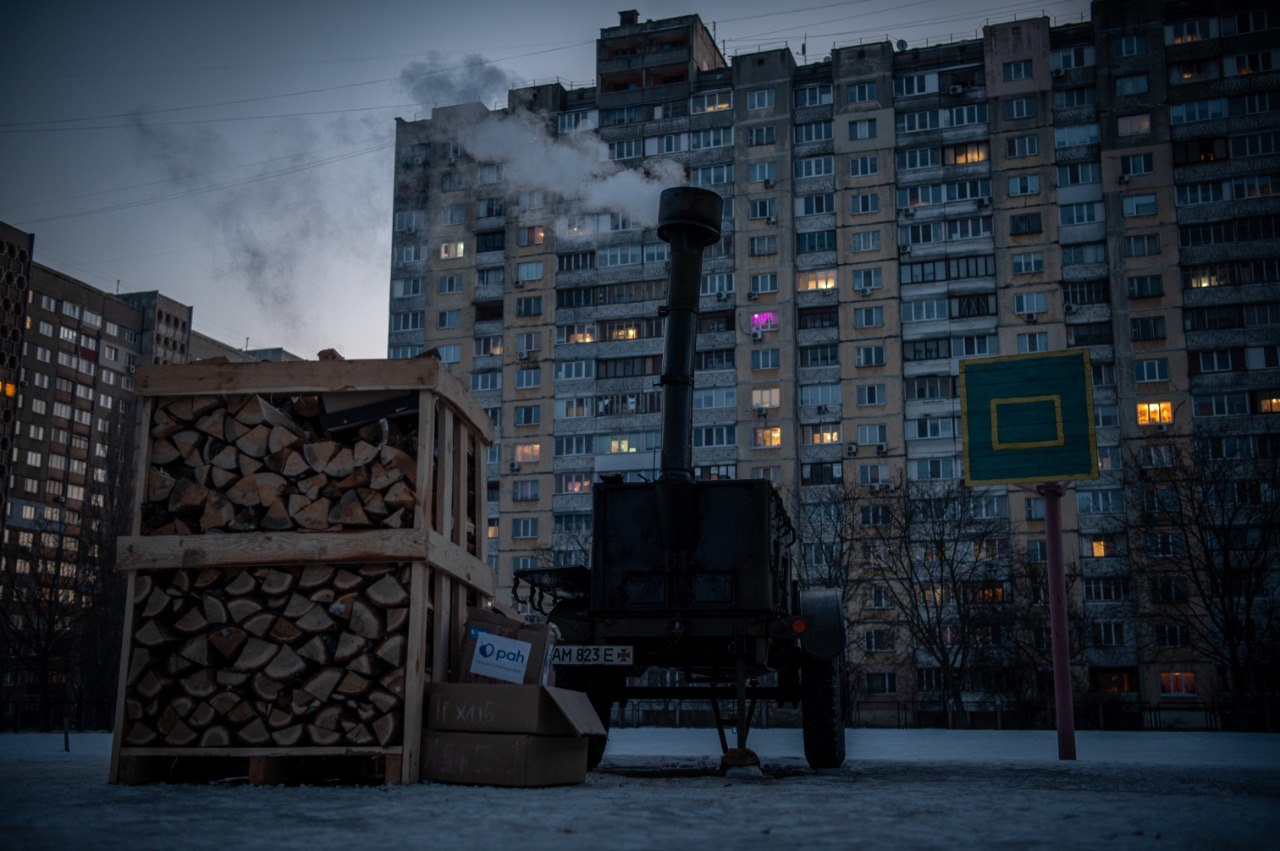

KYIV, 29 June 2026 – Systematic and repeated attacks on Ukraine's energy infrastructure during the 2025–2026 winter caused widespread disruption to essential services and compounded the impact of an increasingly deadly phase of the war on civilians, according to a report issued by the UN Human Rights Office today.
The report on the human rights situation in Ukraine from 1 December 2025 to 31 May 2026 also documents increased civilian casualties, continuing violations against prisoners of war, and ongoing restrictions on fundamental rights in territory occupied by the Russian Federation.
“Our findings highlight several deeply worrying trends: sustained attacks on Ukraine’s energy infrastructure during winter, rising civilian casualties across Ukraine, continued torture and ill-treatment of prisoners of war, and ongoing restrictions on fundamental rights in occupied territory,” said Danielle Bell, Head of the Human Rights Monitoring Mission in Ukraine (HRMMU).
The report documents 1,272 civilians killed and 6,871 injured during the reporting period, a 40 per cent increase compared with the same period one year earlier. Long-range missile and drone attacks remained the leading cause of civilian casualties. The growing use of short-range drones near frontline areas further intensified risks to civilians, impeded evacuations and humanitarian operations, and increased the isolation of some communities.
Between October 2025 and March 2026, the Russian Federation carried out at least 423 attacks on electricity generation, transmission and distribution facilities, as well as at least 74 strikes on combined heat and power plants and other heating infrastructure. Large-scale coordinated attacks often involved hundreds of missiles and long-range drones launched simultaneously against multiple regions.
The attacks reduced electricity generation capacity and resulted in prolonged rolling outages affecting households, hospitals, schools and other essential services. Hundreds of thousands of civilians experienced interruptions to heating during periods of extreme cold, while disruptions to water supply and sanitation further affected daily life. The extensive damage means that it is not possible to fully restore energy generation capacity by next winter.
“Loss of electricity and heating during winter affected people's health, safety and ability to maintain an adequate standard of living, particularly for older people, those with disabilities and families with children,” Bell said. “People will face the same challenges next winter, and even more so if attacks resume.”
Ukrainian authorities also attacked a power plant in the Belgorod region in the Russian Federation during the winter, which caused temporary power and heating outages according to Russian authorities.
The report also documents continuing serious violations against Ukrainian prisoners of war. Russian armed forces executed at least 16 captured Ukrainian servicemen between mid-November 2025 and January 2026. Since February 2022, the UN Human Rights Office has verified the execution of 129 Ukrainian prisoners of war and others hors de combat by Russian forces.
Nearly all repatriated Ukrainian prisoners of war interviewed for the report described torture or ill-treatment during captivity, including severe beatings, electric shocks, denial of adequate medical care and other abuses. The report also documents conflict-related sexual violence against Ukrainian prisoners of war, civilian detainees and civilians in occupied territory.
The report further examines the treatment of Russian prisoners of war held by Ukraine. More than half of those interviewed reported torture or ill-treatment, primarily during capture and transit before arrival at official places of internment.
The report reiterates that all prisoners of war must be treated humanely and in accordance with international humanitarian law.
In territory occupied by the Russian Federation, the report documents continuing restrictions on freedom of expression and other fundamental freedoms, torture and ill-treatment, arbitrary detention, fair trial concerns, forced conscription of protected persons, and continued prohibitions of the Ukrainian curriculum and forced military-patriotic classes. The UN Human Rights Office continues to request access to occupied territory for independent monitoring.
The report includes recommendations to the Russian Federation, Ukraine and the international community aimed at strengthening civilian protection, ensuring accountability, supporting victims and restoring essential infrastructure and services.
The report is based on 1,926 interviews with victims and witnesses, 180 field visits, 48 visits to places of detention, 78 hospital visits, monitoring of 33 trial hearings, and technical, satellite and open-source analysis.