
Kyiv, 12 December 2025 – The Russian Federation’s renewed campaign targeting critical energy infrastructure is putting civilians in Ukraine at serious risk as winter begins, the UN Human Rights Monitoring Mission in Ukraine (HRMMU) said today in its monthly update on the protection of civilians in Ukraine.
The bulletin highlights the intensification of attacks by Russian armed forces against energy infrastructure in Ukraine in November, the increased use of powerful long-range weapons across the country, and continuing high numbers of civilian casualties.
At least 226 civilians were killed and 952 injured across Ukraine in November, with the use by Russian armed forces of powerful long-range missiles and drones in densely populated urban areas accounting for more than half of all civilian casualties. Overnight attacks frequently involved many hundreds of drones and missiles.
“The Russian Federation’s renewed campaign against Ukraine’s energy infrastructure is severely disrupting the essential services that civilians rely on,” Danielle Bell, Head of HRMMU. “Millions of families now endure prolonged periods without electricity, heating and water, hardship that deepens as the days grow shorter and temperatures drop.”
In November, the Russian Federation launched five large-scale combined attacks on energy in addition to more targeted strikes, continuing a trend that started in October. The attacks triggered widespread emergency power outages across most regions, lasting more than 36 hours in some areas, and disrupted heating and water supply in several places.
Such attacks continued into December. On 4 December, for example, several long-range drones struck a power substation in Odesa city, knocking out electricity in the area for multiple days.
Residents told HRMMU that their neighbours, including older persons, persons with disabilities, and those who are bedridden, were unable to leave their apartments for days on end due to elevator shutdowns during outages, and that elevators remained unsafe even after power was restored due to fluctuations in voltage. Volunteers brought food and water to those who could not move, while others kept their food outside on cold balconies to prevent spoilage.
Some buildings rely on electricity for heating, which was also cut during the outage. Temperatures dropped quickly inside apartments whose windows had been blown out in the attack. One resident said, "It's 12 degrees in my apartment now, and it's completely dark because the windows have been boarded up after the attack."
Even after the emergency outages, most regions of Ukraine face lengthy scheduled rolling power cuts, currently lasting up to 16 hours per day. A social worker in the south of Ukraine explained the severe challenges for her clients, describing the situation of an 87-year-old woman: “It is now extremely difficult for her to survive as she is completely dependent on the electricity outage schedule. When the electricity is on for a few hours during the daytime, she must make the most of it by cooking, warming up and eating hot food, stocking up on tap water, doing some laundry and performing simple household chores. For an older person living alone, this is impossible.”
The rise in the number of long-range attacks by the Russian Federation is also a primary driver of the higher civilian casualties HRMMU has documented in 2025. For example, from January to November 2024, long-range drones and missiles killed 509 and injured 2,462 civilians. In the same period in 2025, civilian deaths from long-range weapons increased by 27 per cent to 645 and civilian injuries increased by 68 per cent to 4,123.
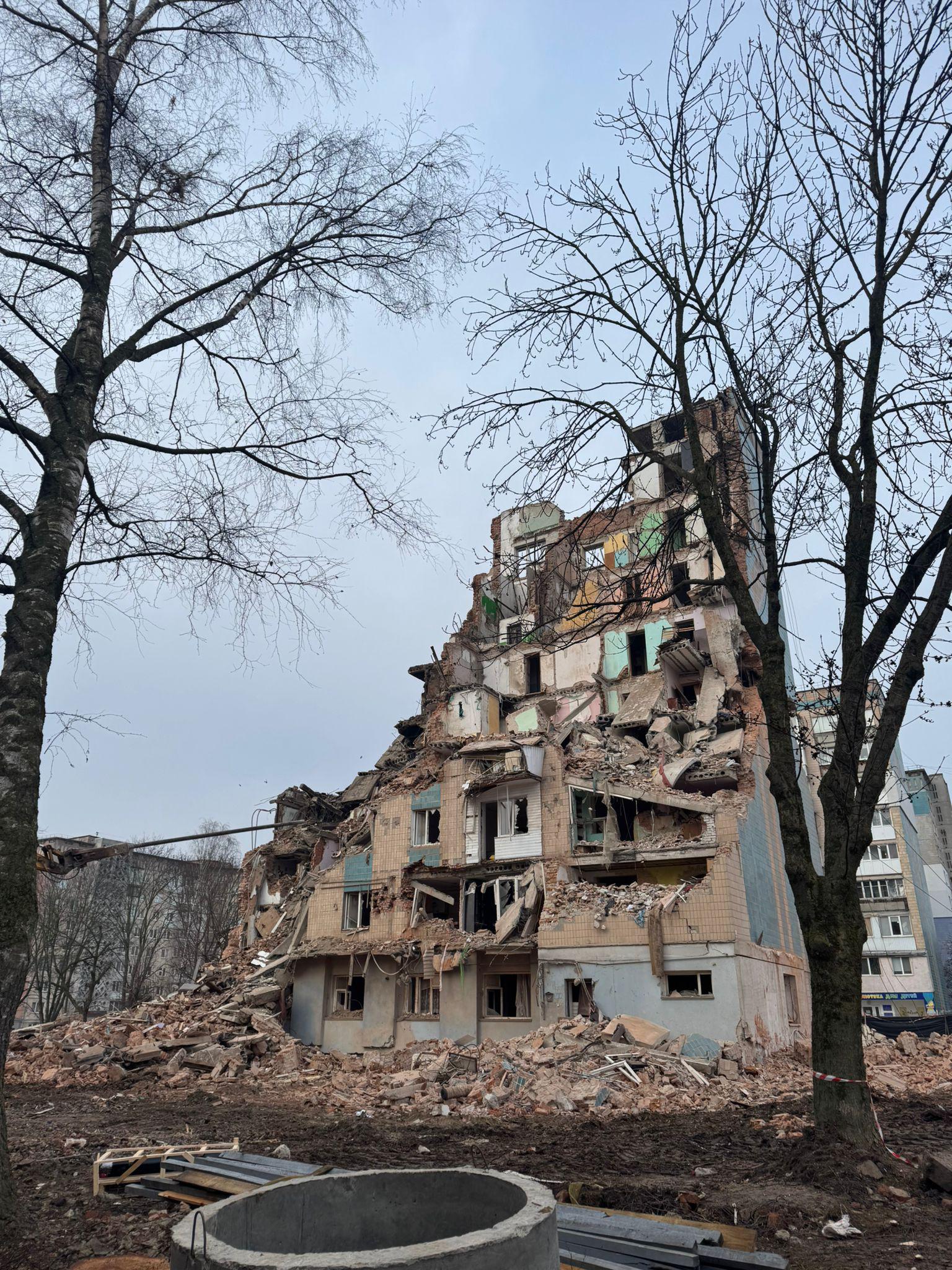
The Russian combined attack on 19 November in Ternopil, in western Ukraine, is a stark example: missiles and long-range drones killed at least 38 civilians, including 18 women, 12 men, 4 girls and 4 boys, and injured 99, including 17 children, in the highest civilian death toll from a single incident since the strike on a funeral reception in Hroza, Kharkiv region, in October 2023. An HRMMU team visited Ternopil and spoke to survivors and witnesses, documenting how a missile directly struck a residential building, causing its structural collapse, as well as the destruction caused by a large fire ignited by the detonation of a long-range drone in the courtyard of another apartment complex.