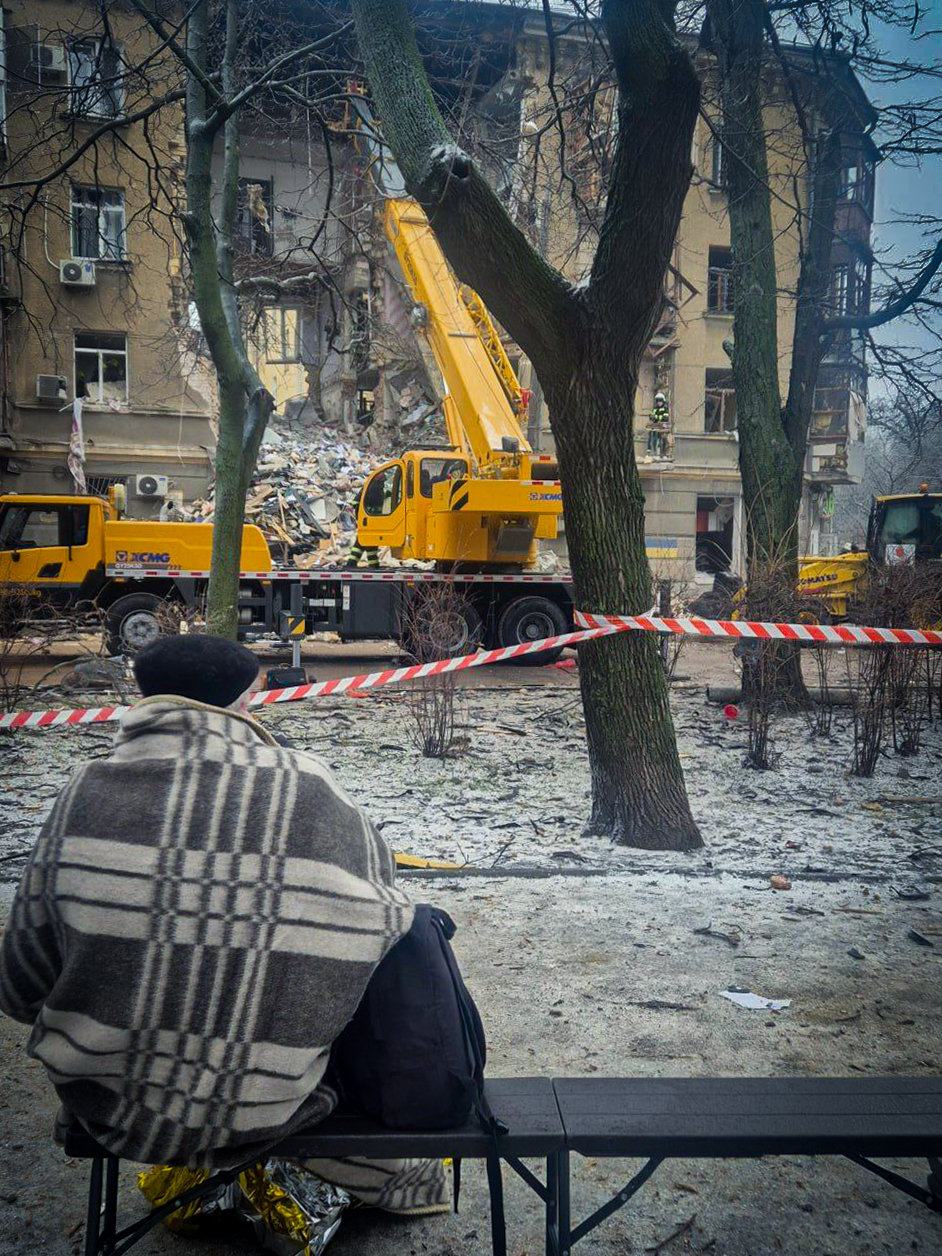

Kyiv, 13 February 2026 – Systematic and repeated attacks by the Russian Federation on Ukraine’s energy infrastructure in January created extreme hardship for the civilian population, the United Nations Monitoring Mission in Ukraine (HRMMU) reported today in its monthly update on civilian harm. The attacks, which continued in February, have caused extensive disruptions to electricity, heating, and water across the country, affecting millions, as temperatures consistently remained below freezing.
HRMMU visited warming tents, hospitals, and educational facilities in areas most affected by the outages, documenting their impact on people’s lives during one of the harshest winters in recent years.
“The scale and persistence of these attacks underscore a grave disregard for the lives and well-being of civilians,” said Danielle Bell, Head of HRMMU. “When power, heating, and water are repeatedly knocked out in the dead of winter, basic survival becomes a daily struggle.”
In January 2026, Russian armed forces conducted near daily attacks on Ukraine’s energy infrastructure, including five large-scale attacks in which several regions were targeted simultaneously. The attacks damaged or destroyed key components of the energy system in at least 17 regions of Ukraine, as well as in Kyiv city.
They caused prolonged electricity outages across the country, which also resulted in disruption to heating and water services, particularly in multi-story buildings. Millions of people were left with access to electricity for just a few hours per day, throughout the month.
Attacks in January also repeatedly struck infrastructure providing central heating to cities. In Kyiv city, for example, missiles and drones struck two combined heat and power plants several times, disrupting central heating to nearly 6,000 multi-story buildings each time. The damage was ultimately so extensive that authorities announced that they would not be able to restore central heating to more than 1,100 multi-story buildings this winter.
The prolonged outages to electricity, heating, and water negatively affected a wide range of human rights, including the right to adequate housing, healthcare, and education, HRMMU explained. Disruptions to central heating caused temperatures in apartments to plunge, in some cases forcing people to relocate. Hospitals and clinics postponed medical procedures. And many schools closed because of lack of electricity and heating.
Certain groups of people were particularly affected by the extended suspension of basic services, HRMMU said. Electricity outages confined persons with limited or no mobility to their homes during outages when elevators did not operate. Some people had to be relocated to institutions. Families with young children faced particular challenges when apartments got cold and they could not cook because of lack of electricity.
HRMMU is also aware of reports that Ukrainian armed forces struck energy infrastructure in the Belgorod region of the Russian Federation in January, resulting in local disruptions to electricity, heating, and water supply for civilians.
“The destruction of critical infrastructure carries foreseeable and devastating human consequences,” Bell added. “It fractures civilian life, interferes with essential needs and human rights, and leaves millions exposed to extreme hardship. Civilians should never bear the cost of attacks on the services that sustain them.”
At least 161 civilians were killed and 757 injured across Ukraine in January, which is similar to the number in January 2025. Attacks with long-range weapons (missiles and drones) launched by the Russian armed forces caused 39 per cent of all civilian casualties (54 killed; 305 injured), usually affecting urban centres far from the frontline. The majority of casualties occurred near the frontline (97 killed; 444 injured), with short-range drones remaining the primary cause of civilian harm (54 killed; 207 injured).