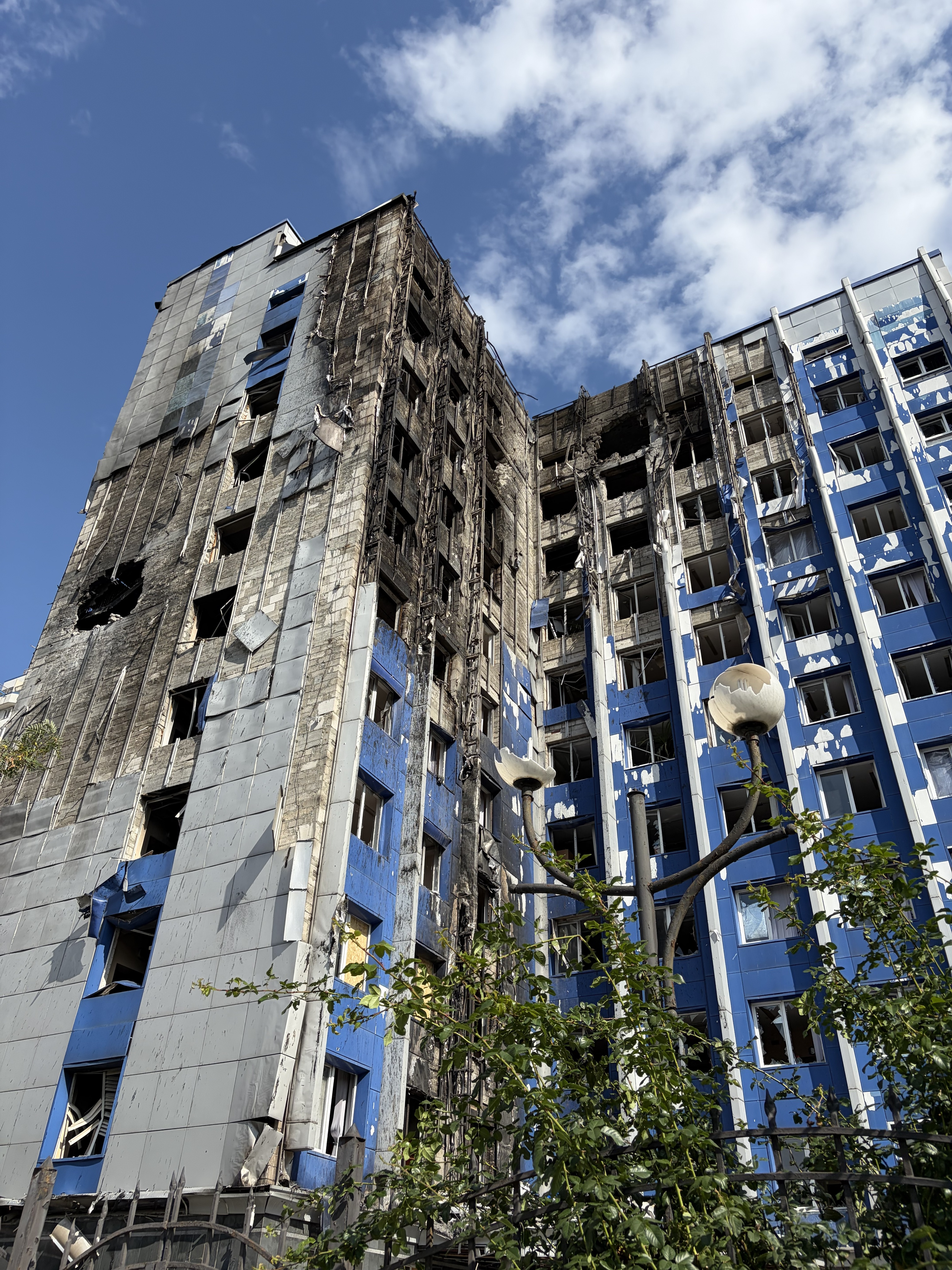

Kyiv, 16 October 2026 – The intensification of attacks by the Russian Federation across Ukraine in September continued a pattern of civilian casualties in 2026 far exceeding levels verified in previous years, with devastating consequences for civilians, the UN Human Rights Monitoring Mission in Ukraine (HRMMU) said when releasing its monthly update on civilian harm in Ukraine today. Repeated attacks on energy infrastructure threaten to deepen that suffering.
HRMMU verified that at least 328 civilians were killed and 2,105 injured in September, which makes the total number of killed and injured 85 per cent higher than in September 2025 (249 killed and 1,068 injured). Civilians were killed and injured across 22 regions of Ukraine and the city of Kyiv, with particularly high casualties in Kyiv city, Kherson, Kharkiv, Sumy and Zaporizhzhia. In Kyiv alone civilian casualties were recorded on 22 of 30 days, more frequently than in any previous month since the start of the full-scale invasion.
The trend of high civilian casualties continued into October, HRMMU said. For example, during the night of 6-7 October, Russian armed forces launched a cruise missile and drone attack across several regions of Ukraine, including Chernihiv region, where 22 civilians were killed and 45 injured in Pryluky. HRMMU documented other attacks with high numbers of killed civilians including in Kramatorsk on 8 October, in Zaporizhzhia on 10 October, and in Lutsk on 14 October.
“The first two weeks of October were among the deadliest periods for civilians in years,” said Danielle Bell, head of HRMMU. “In a matter of days, attacks by the Russian armed forces caused mass-casualty incidents in Kharkiv, Zaporizhzhia, Kramatorsk and Kyiv.”
The verified numbers for September include 18 civilians killed and 44 injured in territory of Ukraine occupied by the Russian Federation. The actual number is likely significantly higher as lack of access and independent sources of information has made it difficult to verify many of the incidents.
The high number of civilian casualties in September and October came as Russian armed forces resumed systematic attacks on energy infrastructure across Ukraine. On 30 August, the Ministry of Defense of the Russian Federation announced that it had begun preparations to launch “massive strikes against Ukrainian energy facilities.” On 30 September, an attack damaged electricity generation, distribution and transmission facilities in three regions and Kyiv city, causing emergency power outages.
Attacks on electricity and heating infrastructure in Ukraine continued into October. In a recent attack, Russian armed forces on 13-14 October struck multiple energy facilities across Ukraine, including the three main power stations in Kyiv. The attack temporarily left 600,000 people in Kyiv without electricity, according to Ukrainian authorities.
Ukrainian armed forces also targeted electricity and heating infrastructure in territory occupied by the Russian Federation. Statistics published by the Unmanned Systems Forces of the Ukrainian armed forces indicated that they had conducted 82 attacks on energy infrastructure in occupied territory and the Russian Federation.
“Systematically attacking electricity and heating infrastructure as winter approaches is bound to inflict significant suffering on the civilian population,” Bell warned.
In a report on attacks on energy infrastructure during the 2025-2026 winter, OHCHR documented the impact of such attacks on the civilian population and concluded that the attacks appeared to have violated fundamental principles of international humanitarian law.